
Everything You Need to Know About Thigh Lift Surgery: Is It Right for You?
You have achieved great success in your weight loss journey or observed the natural changes in your body over the years. However, now you may be facing skin sagging, especially on the inner part of your legs, which does not go away despite diet and exercise. This situation both bothers you aesthetically and can lead to functional problems such as chafing in the summer months. If this scenario sounds familiar to you, it is time to learn more about the "Thigh Lift" surgery.
So, what exactly is this operation, for whom is it a truly suitable solution, and how does the process work? In this article, we answer the most frequently asked questions about thigh lift surgery.
Why is a Thigh Lift Necessary?
The main purpose of thigh lift surgery is to remove excess skin that has loosened and sagged in the inner and upper part of the leg. This situation usually arises for the following reasons:
- Massive Weight Loss: Especially after bariatric surgery (gastric sleeve, etc.) or high weight loss with intensive diets, the skin cannot adapt to the new body contour because it has lost its former elasticity and sags.
- Aging: Over time, collagen and elastin fibers in our skin weaken. This leads to loosening and sagging in the thigh area, as it does in the rest of the skin.
- Genetic Factors: Some people's skin structure may be genetically more prone to sagging.
Who is a Good Candidate for Thigh Lift Surgery?
There are some criteria to understand whether this operation is the right solution for you. Generally, a good candidate is someone who:
- Has moderate or advanced skin sagging in the inner thighs,
- Has a stable weight (i.e., does not plan for major weight changes in the near future),
- Does not have a serious health problem that would prevent surgery,
- Does not smoke or can quit in the pre-operative and post-operative periods,
- Has realistic expectations regarding the scars that will form after surgery.
What are the Surgical Methods?
Thigh lift surgery is planned individually according to the degree and prevalence of sagging. Basically, two different incision techniques are used:
1. Mini Thigh Lift: Preferred in mild cases where sagging is limited only to the uppermost part of the thigh. The incision is hidden in the groin crease and the scar is shorter.
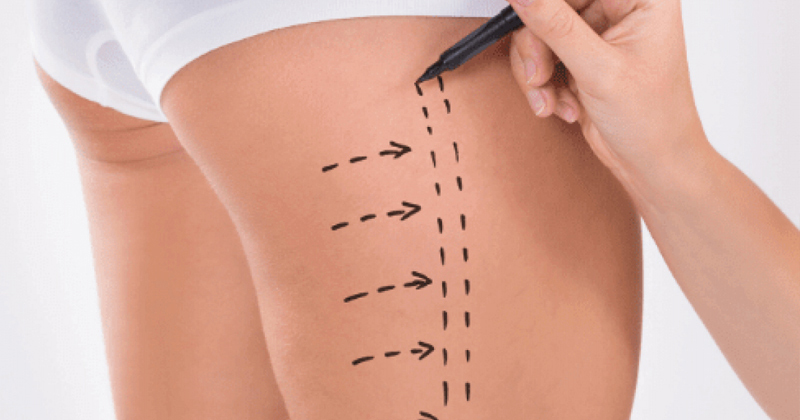
2. Standard (Vertical) Thigh Lift: Applied in more advanced cases where sagging extends towards the knee. The incision starts from the groin crease and extends towards the knee on the inner part of the leg. In this way, more skin can be removed and more effective tightening is achieved.
Most of the time, to achieve the best result, this procedure is combined with Liposuction (especially Vaser Liposuction) to remove excess fat in the area.
How Does the Surgery and Recovery Process Work?
Thigh lift surgery is performed under general anesthesia and takes about 2-3 hours. After the surgery, you may usually need to stay in the hospital for 1-2 days. The pain that can be felt in the first days is easily controlled with simple painkillers. It is important to wear a special corset for several weeks during the recovery process to reduce edema and support the new form of the legs. You can return to your desk job and daily life within average 1-2 weeks. It is recommended that you start heavy sports activities after about 4-6 weeks.
Thigh lift surgery is an operation with satisfactory results that increases both physical comfort and self-confidence by providing the person with tighter, smoother, and aesthetic leg contours. If you complain about skin sagging on your legs, consulting with an experienced plastic surgeon to create the most accurate treatment plan for you is the most important step in this journey.