
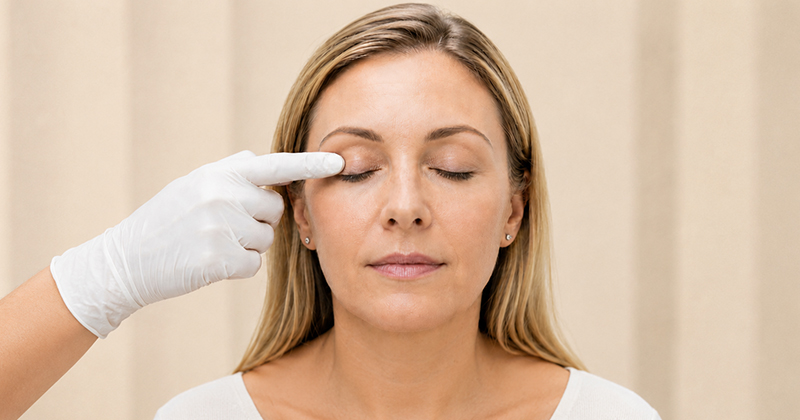
What Is Eyelid Aesthetics (Blepharoplasty)?
Eyelid aesthetics, medically known as blepharoplasty, is a surgical procedure that aims to reduce excess skin, sagging, puffiness, and a tired appearance that develop over time in the upper and lower eyelids. While planning aims to create a more open and rested appearance around the eyes, preserving the patient’s unique facial expression is essential.
When planning eyelid aesthetics in Samsun, the evaluation is not limited to excess skin on the eyelid. The position of the eyebrows, under-eye anatomy, lower-eyelid bags, skin quality, and the overall facial expression are assessed together. For this reason, a successful blepharoplasty plan is based on a personalized periocular evaluation rather than a standardized procedure.
Eyelid Aesthetics and Blepharoplasty in Samsun at a Glance
The eye area is one of the most noticeable parts of the face. Excess skin on the upper eyelid may make the gaze appear heavy, while lower-eyelid bags may create a tired expression even when the person is well rested. During planning, eyelid anatomy, eyebrow level, under-eye support, and overall facial balance are evaluated together.
When Is Eyelid Aesthetic Surgery Performed?
Eyelid aesthetic surgery is most commonly considered for patients with excess skin on the upper eyelid, puffiness of the lower eyelid, and a tired appearance around the eyes. Some patients report that they look older, sleep-deprived, or unhappy when they look in the mirror. In some cases, advanced upper-eyelid sagging may create a feeling of heaviness or shadow in the visual field.
Eyelid aesthetics may be considered in the following situations:
- Sagging and excess skin on the upper eyelid
- Loss of definition of the eyelid crease
- Makeup collecting or smudging on the upper eyelid
- Puffiness and swelling of the lower eyelid
- A persistently tired or sleep-deprived expression around the eyes
- Impairment of the upper visual field in advanced cases of sagging
Not every concern around the eyes requires surgery. Non-surgical supportive treatments may be considered for mild fine lines, reduced skin quality, or limited shadowing. However, when there is significant excess skin, eyelid sagging, or structural lower-eyelid bags, a surgical approach may be more appropriate.
How Is Upper Eyelid Aesthetic Surgery Planned?
The main goal of upper-eyelid surgery is to remove, in a controlled manner, excess skin and, when necessary, excess fat that create heaviness on the eyelid. During this procedure, the natural eyelid crease is preserved as much as possible. It is important not to remove more tissue than necessary, because the natural expression around the eyes should be maintained and the gaze should not appear artificial or surprised.
During the examination, excess upper-eyelid skin, eyelid opening, eyebrow position, and overall facial balance are assessed together. In some patients, the feeling of heaviness in the upper eyelid may result not only from eyelid skin but also from eyebrow drooping. In such cases, eyebrow lift aesthetics may also be evaluated.
The source of sagging must be evaluated correctly
One of the most important points in upper-eyelid assessment is identifying the true source of the sagging. Some patients have excess eyelid skin; in others, the eyelid appears heavier because the eyebrow has shifted downward. Some patients may also have a different condition involving the eyelid muscle or eyelid opening. Removing only excess skin without making these distinctions may not produce the expected result.
How Is Lower Eyelid Aesthetic Surgery Evaluated?
Lower-eyelid aesthetic surgery may be planned for patients with lower-eyelid bags, excess skin, laxity, and irregularities in the under-eye contour. Lower-eyelid puffiness is often not caused solely by lack of sleep. Prominent fat pads, weakening of connective tissues, and reduced skin elasticity may all contribute to this appearance.
When planning lower blepharoplasty, the goal is not simply to remove the bags. It is important to preserve a natural transition between the under-eye area and the cheek, avoid lower-eyelid retraction, and maintain the shape of the eye. In some patients, the issue affecting the appearance of the lower eyelid may also result from reduced midface support rather than the eyelid alone. In such cases, the need for a midface lift may also be evaluated separately.
If there is significant lower-eyelid puffiness and excess skin, surgical evaluation may be required. However, in some patients the main concern may be under-eye hollowing or mild shadowing, in which case non-surgical options such as under-eye light filler may also be considered.
The lower eyelid should be assessed holistically
Lower-eyelid aesthetics should address under-eye bags, under-eye hollows, and cheek support together. Reducing puffiness alone may not be sufficient in every patient. If the transition between the under-eye area and the cheek is sharp, the patient may still complain of a tired appearance after surgery. Therefore, lower-eyelid planning should preserve the overall integrity of the eye area.
Who Is a Suitable Candidate for Eyelid Aesthetics?
Eyelid aesthetics may be considered for adult patients with significant excess skin, sagging, puffiness, or a tired appearance around the eyes. Suitability is not determined by age alone. Genetic characteristics, skin quality, periocular anatomy, eyebrow position, overall health, and the patient’s expectations are evaluated together.
Use of blood-thinning medication, dry eye, thyroid disorders, uncontrolled chronic diseases, or previous eye surgery should always be disclosed during the examination. This information is important for planning surgery safely and reducing potential risks.
Expectations should be realistic
Patients considering eyelid aesthetics should have realistic expectations. Blepharoplasty can reduce excess skin, puffiness, and a heavy appearance around the eyes, but it does not eliminate all signs of facial aging on its own. Adjacent areas such as the eyebrows, forehead, midface, and overall skin quality also affect the appearance of the eye area.
Preoperative Examination for Eyelid Aesthetics in Samsun
During an examination for eyelid aesthetics in Samsun, not only the patient’s current complaint but also the overall balance of the face is evaluated. The presence of excess skin on the upper eyelid, the degree of lower-eyelid puffiness, eyebrow position, under-eye support, and skin quality are examined in detail.
Personalized Assessment
Based on this evaluation, a plan may involve only the upper eyelid, only the lower eyelid, or both the upper and lower eyelids. In some patients, eyebrow position, midface support, or under-eye anatomy may also affect the overall result. Therefore, the treatment decision should be individualized.
Detailed Surgical Planning
During the examination, photographic assessment, asymmetries around the eyes, the eyelid line, existing scars, skin thickness, and the patient’s expectations are reviewed together. Previous eyelid surgery, laser treatment, filler procedures, or eye disease may also influence the plan. In this way, the procedure is approached not merely as an aesthetic request but as a process of safe surgical planning.
How Is Eyelid Aesthetic Surgery Performed?
Upper Eyelid Approach
How eyelid aesthetic surgery is performed depends on whether the plan involves the upper eyelid, lower eyelid, or a combined procedure. For the upper eyelid, the incision is usually planned within the natural eyelid crease. Excess skin and, when necessary, fat tissue are adjusted in a controlled manner. The aim is to reduce heaviness and make the eyelid crease more defined.
Lower Eyelid Approach
In lower-eyelid surgery, depending on the patient’s needs, an incision close to the lash line or, in suitable patients, an approach through the inside of the eyelid may be preferred. Rather than removing all lower-eyelid fat, repositioning the fat in some patients may create a smoother transition between the under-eye area and the cheek. The most appropriate technique is determined during the examination.
Anesthesia and the surgical goal
The procedure may be planned under local anesthesia, sedation, or general anesthesia. The choice of anesthesia varies according to the patient’s general health, the extent of the procedure, and the surgeon’s assessment. The main goal is to adjust the necessary tissues in a controlled manner while preserving eyelid function and facial expression.
Recovery After Eyelid Aesthetic Surgery
The First Days
During the first days after eyelid aesthetics, swelling, bruising, tightness, and mild sensitivity may occur around the eyes. These findings are usually a natural part of the healing process. Cold applications, medication use, protection of the eye area, and attending follow-up appointments as recommended by the doctor may help make recovery more comfortable.
The Following Period
The recovery process may vary depending on whether the upper eyelid, lower eyelid, or a combined procedure was performed. Although many patients can return to social life within a relatively short time, the swelling may take several weeks to subside and the eyelid tissues may require several weeks to several months to settle fully. Therefore, the result should not be judged definitively during the early period.
Points to consider during recovery
During the early period, it is important not to rub the eyes, to avoid strenuous exercise, to protect the area from the sun, and to follow the care plan recommended by the doctor. Because the eye area is sensitive, recovery should not be rushed, and patients should remember that swelling and bruising may subside at different rates from person to person.
What Are the Risks of Eyelid Aesthetic Surgery?
Although eyelid aesthetics is a carefully planned surgical procedure, it carries certain risks and possible complications, as does every operation. The likelihood of these risks may vary depending on whether upper- or lower-eyelid surgery is performed, the patient’s eye anatomy, general health, smoking status, and healing characteristics.
Temporary or More Common Conditions
- Swelling, bruising, tightness, and sensitivity
- Dryness, stinging, tearing, or light sensitivity in the eyes
- Temporary blurred vision and numbness around the eyelids
- Temporary asymmetry between the eyelids during healing
- Redness or prominence along the scar line
Less Common but Important Risks
- Bleeding, infection, or delayed wound healing
- Difficulty closing the eyelid completely
- Outward turning or downward pulling of the lower eyelid
- Persistent dryness, noticeable asymmetry, or the need for additional correction
- Temporary or permanent changes in vision; very rarely, serious vision loss
Risk assessment is personalized
Dry eye, thyroid disease, a tendency to bleed, uncontrolled chronic illness, smoking, or previous eye surgery should be disclosed during the examination. The surgeon should evaluate the patient’s personal risks and the precautions that may be taken in detail before surgery.
When Should You Contact a Doctor After Eyelid Aesthetic Surgery?
Mild swelling, bruising, stinging, and tightness may occur during the first days. However, if any of the following symptoms develops, the patient should contact the operating doctor or an appropriate healthcare facility without waiting for the routine follow-up appointment:
- Sudden decrease in vision, loss of vision, or newly developed double vision
- Severe eye pain that does not improve with medication or continues to increase
- Rapidly increasing, firm, or tense swelling on one side
- Bleeding that does not stop, increases, or is bright red
- Increasing redness, warmth, foul-smelling discharge, pus, or fever
- Inability to close the eye, significant dryness of the eye surface, or severe burning
- Any other unexpected symptom or rapid worsening
Symptoms that may require urgent evaluation
In particular, if a change in vision, severe pain, rapidly increasing one-sided swelling, or uncontrolled bleeding develops, medical assessment should be obtained without delay.
Will There Be a Scar After Eyelid Aesthetic Surgery?
In upper-eyelid aesthetics, the incision line is generally planned within the natural eyelid fold. In this way, after healing is complete, the scar can often be concealed so that it is not noticeable during normal viewing. In the lower eyelid, depending on the technique used, the incision may be made close to the lash line or, in suitable patients, from inside the eyelid.
The appearance of scars may vary according to the patient’s skin type, wound-healing characteristics, smoking, sun protection, and compliance with postoperative care recommendations. Therefore, scar development does not progress in the same way for every patient.
Factors affecting scar quality
Scar quality does not depend solely on the surgical technique. The patient’s wound-healing characteristics, skin sensitivity, smoking, regular follow-up, and protection from the sun may also affect the maturation of the scars.
Preserving Facial Expression in Eyelid Aesthetics
When blepharoplasty is planned, the shape of the eye, eyelid function, and the patient’s unique facial expression must be preserved while excess skin and puffiness are reduced. Removing excessive tissue may cause difficulty closing the eyelid or unwanted changes in eye shape.
Balanced surgical planning
The upper and lower eyelid anatomy, eyebrow level, and under-eye support are evaluated together to create a measured surgical plan tailored to the patient’s needs.
What Should Be Considered Before Eyelid Aesthetic Surgery?
Health Information and Medication Use
Before eyelid aesthetics, the patient’s general health, current medications, and eye-health history should be evaluated. Blood-thinning medications, herbal supplements, smoking, and chronic diseases may affect the surgical plan. For this reason, patients must provide complete health information during the examination.
Clarifying Expectations
Expectations should be clarified before surgery, and the patient should be clearly informed about which changes are possible. Eyelid aesthetics is not a procedure that completely changes the face; it is a surgical plan aimed at reducing heaviness, sagging, and puffiness around the eyes. Making this distinction correctly is important for patient satisfaction.
Why Is Proper Planning Important for Eyelid Aesthetics in Samsun?
For patients considering eyelid aesthetics in Samsun, the most important point is that the procedure should not be viewed only as an aesthetic touch. The eyelid is an important anatomical region in terms of visual function, protection of the eye surface, and facial expression. Therefore, the intervention should be measured, balanced, and individualized.
When the patient’s eye anatomy, eyebrow level, skin elasticity, lower-eyelid support, and expectations are evaluated together, a more balanced and safer surgical plan can be created. Because every procedure performed around the eyes may affect facial expression and eyelid function, the planning stage is as important as the operation itself.
Frequently Asked Questions
Are the results of eyelid aesthetics permanent?
Eyelid aesthetics can maintain its effect for many years. However, because the aging process continues, changes around the eyes may develop again over time.
Does eyelid aesthetic surgery change the gaze?
In properly planned eyelid aesthetics, the aim is not to change the gaze but to reduce a tired and heavy appearance and achieve a more rested expression.
Can upper and lower eyelid surgery be performed at the same time?
In suitable patients, upper and lower eyelid aesthetics may be planned during the same session. This decision is made during the examination according to the anatomy of the eye area and the patient’s needs.
When can I return to social life after eyelid aesthetic surgery?
The time required to return to social life varies according to the extent of the procedure and the patient’s healing rate. Swelling and bruising may be present during the first days, while noticeable improvement generally develops over the following weeks.
Can eyelid aesthetics be performed with non-surgical methods?
Non-surgical methods may be considered for mild fine lines or limited shadowing. However, when there is significant excess skin, eyelid sagging, or structural puffiness, surgical treatment may be more appropriate.
Appointments and Contact for Eyelid Aesthetics in Samsun
You can contact our clinic to receive detailed information about eyelid aesthetics, schedule an examination, and learn which blepharoplasty approach is most suitable for you.
Address: Platin Office, Atatürk Boulevard 3rd Section No: 43, Yenimahalle, Floor: 5, 55270 Atakum / Samsun
You may submit an appointment request through our website or receive information about the eyelid aesthetics process via WhatsApp.