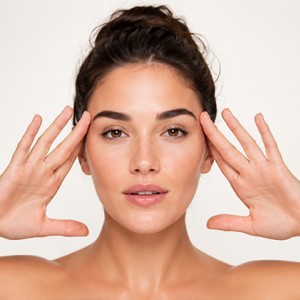
A More Recovered Appearance with Facelift Surgery
Facelift surgery is an aesthetic surgical procedure aimed at surgically recovering sagging, loosening, jawline blurring, and excess skin that occurs over time in the face and neck area. The aim in the assessment performed for facelift surgery in Samsun is not to make the person look different than they are; but to achieve a more rested, more recovered, and natural appearance by preserving the existing facial expression.
In the facelift planning performed by Op. Dr. Oğuzhan Aydoğdu, the face is not evaluated only at the skin level. Skin quality, the SMAS layer, cheek tissue, jawline, neck structure, previously performed procedures, and the patient's expectations are handled together. For this reason, a facelift is considered a part of a broader facial aesthetics plan in most patients.
Personalized Facelift Planning
- Natural results that preserve facial expression The goal in facelift surgery is not to change the person's facial character; but to provide a more rested, recovered, and balanced appearance.
- Face and neck are evaluated together A holistic planning is made by examining the jawline, cheek tissue, jowl area, and neck skin together.
- SMAS and deep tissues are taken into account In modern facelift planning, not only excess skin but also the deep tissues that support the face are evaluated.
- Selection of patient-specific techniques Mini facelift, SMAS facelift, deep plane facelift, or neck aesthetics can be planned according to needs.
What is Facelift Surgery?
Facelift surgery is a surgical application performed to correct loosening, sagging, and loss of contour in the mid-face, lower face, jawline, and neck areas. During the aging process, cheek tissue may shift downwards, lines extending from the edge of the nose to the corner of the mouth may become prominent, accumulation may occur at the edge of the jaw, and loosening may be seen in the neck area.
These changes do not only occur on the skin surface. The deep tissues that carry the face also loosen over time. For this reason, the aim in modern facelift surgeries is not only to remove excess skin but to support the tissues that carry the face in the correct direction.
Short answer
Facelift surgery is a surgical procedure performed to correct sagging and excess skin in the face and neck area. The technique to be used is determined according to skin structure, the degree of sagging, the condition of the neck area, and the patient's general health characteristics.
How is a Facelift Examination Performed in Samsun?
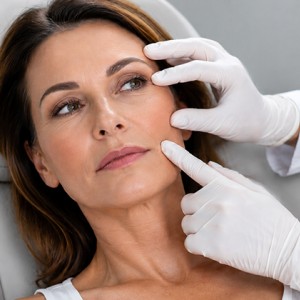
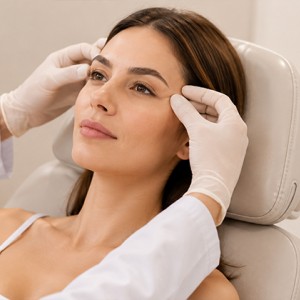
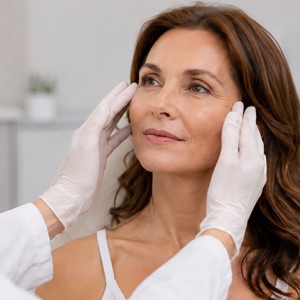
For patients considering facelift surgery in Samsun, only the surgical technique is not discussed at the first examination. Pre-operative preparation, the hospital process, follow-up appointments, and things to be careful about during the recovery period are also handled in detail.
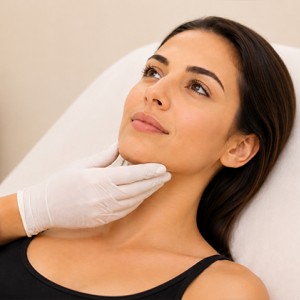
During the examination, the jawline, cheek tissue, jowl area, neck skin, skin elasticity, and the general aging pattern of the face are examined. The patient's expectations, previous surgeries, medications used, smoking habits, and general health status are also important for the surgical decision.
Why is a Physician Evaluation Important for Facelift in Samsun?
Facelift surgery is an aesthetic surgical procedure that requires the evaluation of facial anatomy and the aging process together. For this reason, it is important that the planning is done by a plastic, reconstructive, and aesthetic surgery specialist.
In every patient, the face-neck relationship, skin quality, direction of sagging, and tissue laxity are different. While a mini facelift may be sufficient for some patients, a more comprehensive approach with SMAS-supported facelift, deep plane facelift, or neck aesthetics may be required for others. The goal in the first meeting is to talk realistically about the patient's expectations and create a surgical roadmap suitable for the facial structure.
Which Areas is Facelift Applied To?
In facelift planning, the mid-face, lower face, and neck are not considered independent of each other. When these regions are handled together, the face-neck transition can be made more balanced.
Mid-Face
Cheek tissue, the cheekbone area, nasolabial lines, and volume loss are evaluated. In suitable patients, mid-facelift, fat injection, or deep plane facelift can be planned.
Lower Face
The jawline, cheek sagging, jowl area, and facial contour are evaluated. SMAS facelift, mini facelift, or deep plane facelift can be considered.
Neck Area
Jowls, neck skin, platysma bands, and the chin-neck angle are evaluated. In suitable patients, neck aesthetics, neck lift, or jowl liposuction can be applied.
Face-Neck Transition
In facelift planning, not only the cheeks but also the jawline and neck transition are taken into account. Thus, a more balanced and holistic result is targeted.
Which Complaints are Corrected with a Facelift?
Facelift surgery is most frequently preferred for signs of aging in the lower face, jawline, and neck area. Since the same problems are not seen in every patient, the scope of surgery is shaped according to examination findings.
- Loosening and sagging in the lower face
- Loss of definition of the jawline
- Accumulations at the edge of the jaw called jowls
- Downward displacement of cheek tissue
- Excess skin in the jowl and neck area
- Blurring of the transition between the face and the neck
What is the primary goal?
The goal here is not to overstretch the skin. The main target in facelift surgery is to provide a more natural recovery by supporting the tissues that carry the face.
Who is Facelift Suitable For in Samsun?
Facelift surgery comes to the fore in patients who have significant sagging in the face and neck area, where sufficient recovery cannot be provided with non-surgical applications. The suitability decision is not made only according to age; skin structure, tissue quality, degree of sagging, neck structure, and general health status are examined together.
- People with significant loosening and sagging in the jawline
- Patients who feel downward displacement in their cheeks
- Individuals with excess skin or a banded appearance in the neck area
- Patients who are uncomfortable with the jowl and chin-neck transition
- People who think their face looks more tired and low than before
- Patients whose general health status is suitable for surgery and who have realistic expectations
Who Might Not Be Suitable for a Facelift?
Facelift surgery may not be suitable for every patient. In individuals with uncontrolled chronic diseases, risk factors that may negatively affect wound healing, or who carry unrealistic expectations from the surgery, the surgical decision should be made more carefully.
Smoking habits, certain blood thinners, previous operations, skin quality, and general health status can affect the surgery plan. For this reason, the facelift decision should be made after evaluating the patient's face-neck structure and general health status.
How is Facelift Surgery Performed in Samsun?
The technique to be applied in facelift surgery is selected according to the patient's facial structure, degree of sagging, and condition of the neck area. In the pre-operative evaluation, the amount of excess skin, in which direction the tissues will be supported, and whether additional procedures are required are determined.
During the procedure, incisions are usually placed in the natural lines around the ear and the scalp line. The skin is carefully lifted, the underlying carrier tissues are supported in the appropriate direction, and the excess skin is removed. The location of the incisions and the scope of the surgery vary according to the patient's needs.
SMAS-Supported Facelift
SMAS is an important layer located under the skin and among the supporting structures of the face. Procedures based only on stretching the skin may become insufficient over time or create an unnatural tension. For this reason, supporting the SMAS layer is an important part of facelift surgery in suitable patients.
- SMAS facelift helps in the recovery of supportive tissues under the skin.
- SMAS plication facelift is based on the principle of supporting loosened carrier tissues by folding.
- Deep plane facelift addresses the mid-face and lower face areas together through deeper tissues.
- Mini facelift can be preferred in patients with more limited sagging.
Differences Between Mini Facelift, SMAS, and Deep Plane Facelift
There is no single standard method in facelift surgery. The same technique is not applied to a patient with mild sagging and a patient with significant loosening in the mid-face, lower face, and neck areas.
Incision Locations and Scars in Facelift Surgery
Incisions in facelift surgery vary according to the scope of the procedure performed. Usually, the front of the ear, around the earlobe, behind the ear, and the scalp line are preferred. These areas ensure that the scars attract less attention within the natural folds.
The appearance of scars after surgery varies from person to person. Skin structure, wound healing characteristics, surgical technique, smoking habits, and post-operative care are effective in this process. For this reason, it cannot be said that the scars will be completely invisible; however, with correct planning, the aim is to make them less noticeable in daily life.
Are Facelift and Neck Aesthetics Performed Together?
Lower face sagging is often seen together with loosening in the neck area. For this reason, the neck area should be evaluated separately when planning facelift surgery. Leaving significant laxity in the neck while recovering the jawline may reduce the integrity of the result.
In facelift surgeries performed with neck aesthetics, making the chin-neck angle prominent, reducing the appearance of jowls, and organizing the neck bands can be achieved.
Facial Oval
It is aimed for the facial oval to become more prominent by recovering the lower face and jawline.
Neck Transition
A more balanced face-neck appearance can be obtained when loosening in the neck area is handled together.
Difference Between Facelift and Non-Surgical Methods
Facelift surgery is a surgical solution for patients with significant sagging and excess skin. Non-surgical aesthetic applications, on the other hand, are preferred more for mild signs of aging, volume loss, mimic lines, and skin quality problems.
Procedures such as filler, botulinum toksin, mesotherapy, youth vaccine, or liquid facelift can provide benefits in suitable patients; however, they do not take the place of facelift surgery if there is significant excess skin and tissue sagging. This distinction must be made correctly during the examination.
Supportive Applications After Facelift
After facelift surgery, non-surgical applications can be utilized in some patients to protect skin quality, support areas with volume deficiency, or reduce mimic lines. These procedures can support the continuity of the surgical result.
- Mimic lines can be softened with botulinum toksin applications.
- Areas with volume loss can be supported with filler applications.
- Under-eye light filler can be preferred for under-eye shadowing.
- Liquid facelift can be evaluated in patients with a mild need for recovery.
- Mesotherapy, youth vaccine, and skin care can help in supporting the skin tissue.
Pre-Facelift Preparation
The patient's general health status is evaluated before facelift surgery. Medications used, blood thinners, smoking habits, chronic diseases, and previously performed operations are important for surgical planning.
In the pre-operative period, it is necessary to follow the physician's recommendations, control risk factors if any, and share expectations clearly. This process is important for both surgery safety and result satisfaction.
Post-Facelift Recovery Process
The recovery process after a facelift varies according to the scope of the procedure performed and the person's tissue structure. In the first days, swelling, bruising, tension, and sensitivity may be seen in the face and neck area. These are expected situations after surgery.
First Days
It may be necessary to keep the head slightly high, protect the facial area from impacts, and use the bandage or face corset recommended by the physician.
Subsequent Process
Swelling and bruising usually decrease in the first weeks. It may take between a few weeks to a few months for the facial lines to settle, the tissues to soften, and the natural appearance to emerge.
Things to consider during the recovery process
Smoking habits can negatively affect wound healing. It is important not to skip follow-up appointments and to follow doctor recommendations for the quality of the recovery process.
Are There Risks to Facelift Surgery?
As with every surgical procedure, there are some risks in facelift surgery. Situations such as bleeding, infection, wound healing problems, prominence of scars, sensory changes, asymmetry, or the need for revision can be seen, although rarely.
Risk assessment is made according to the patient's health history, medications used, smoking habits, skin structure, and the surgical technique to be applied. To reduce these risks, the surgery must be planned for the appropriate patient, under safe surgical conditions, and by taking the patient's general health status into account.
Natural Appearance in Facelift Surgery
One of the most important issues in facelift surgery is the preservation of a natural appearance. A result that is overly stretched, whose mimicry has changed, or that has moved away from the facial character is not considered aesthetically successful.
For a natural result, the carrier tissues of the face should be supported in the correct direction, excess skin should be removed measuredly, and the face-neck transition should be organized together. Thus, the person looks younger while preserving their own facial expression.
Samsun Facelift Surgery Prices
Samsun facelift surgery prices vary according to the technique to be applied, the scope of the surgery, additional procedures such as neck aesthetics or eyelid surgery, hospital conditions, and the personal surgical plan.
Mini facelift, SMAS facelift, deep plane facelift, or face-neck lift are not procedures within the same scope. For this reason, clear price information can be given after examination and surgical planning.
Frequently Asked Questions About Facelift Surgery
Who is facelift surgery suitable for?
People who have significant sagging, loosening, and loss of contour in the face and neck area, and whose general health status is suitable for surgery, can be evaluated for facelift surgery.
Does facelift surgery change the facial expression?
In a correctly planned facelift surgery, the aim is not to change the facial expression. A more recovered and rested appearance is provided by preserving the person's own facial character.
Can facelift and neck lift be performed together?
Yes. Since lower face sagging is usually seen together with loosening in the neck area, facelift and neck aesthetics can take place in the same surgery plan.
What is the difference between mini facelift and classic facelift?
Mini facelift is preferred in patients with more limited sagging. If there is more significant sagging, excess skin, and neck laxity, more comprehensive facelift techniques may be required.
Does facelift surgery provide the same effect as non-surgical procedures?
No. Non-surgical procedures can be supportive in mild signs of aging. In patients with significant sagging and excess skin, surgical facelift is a more effective option.
Will there be scars after a facelift?
Incisions are usually planned in areas that attract less attention, such as around the ear and the scalp line. The appearance of scars varies according to the person's skin structure, the recovery process, and compliance with care recommendations.
How long does recovery take after a facelift?
Recovery time varies according to the scope of the procedure performed. Swelling and bruising decrease in the first weeks; it may take a few weeks to a few months for the facial lines to settle.
How are Samsun facelift prices determined?
Prices vary according to the technique to be applied, scope of surgery, additional procedures, hospital conditions, and the personal surgical plan. Clear price information is given after the examination.
Contact and Appointment
You can contact our clinic to get detailed information about facelift surgery, plan an examination, and learn about the most suitable facial rejuvenation approach for you.
Address: Platin Ofis, Atatürk Bulvarı 3. Kısım No: 43, Yenimahalle, Floor: 5, 55270 Atakum / Samsun
If you wish, you can create an appointment request through our site, and also examine our facial aesthetics page to learn about facial rejuvenation and other aesthetic surgical procedures.
Plan your facelift process in Samsun with a natural, balanced, and personalized approach.
You can contact us to get detailed information about facelift surgery, plan an examination, and learn about the most suitable surgical approach for you.