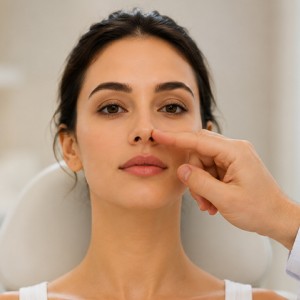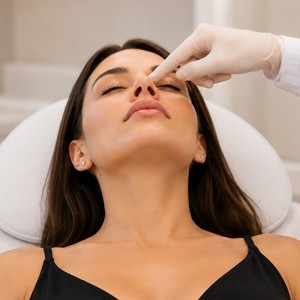
Rhinoplasty in Turkey: Facial Harmony and Breathing Function
Rhinoplasty is a surgical procedure designed to improve the harmony between the nose and the overall proportions of the face. When structural issues inside the nose affect breathing, functional concerns can also be assessed as part of the surgical plan.
For patients considering rhinoplasty in Turkey, treatment planning is tailored to the individual by assessing nasal anatomy, skin characteristics, facial proportions, breathing function and personal expectations together. Op. Dr. Oğuzhan Aydoğdu is a specialist in Plastic, Reconstructive and Aesthetic Surgery and has also participated in national and international training programmes focused on rhinoplasty and preservation rhinoplasty.
Our Approach to Rhinoplasty in Turkey
Because the nose is positioned at the centre of the face, even subtle changes can influence the profile and overall facial balance. Rhinoplasty is therefore not simply about making the nose smaller or creating a particular shape. The goal is to develop an individualised plan that complements the patient's facial features while considering both aesthetic and functional needs.
For patients seeking rhinoplasty in Turkey, the same core principle applies: nasal anatomy and breathing function are assessed first, followed by a discussion of surgical options that are appropriate for the patient's expectations and individual anatomy. There is no single nose shape or surgical technique that is suitable for everyone.

What Is Rhinoplasty?
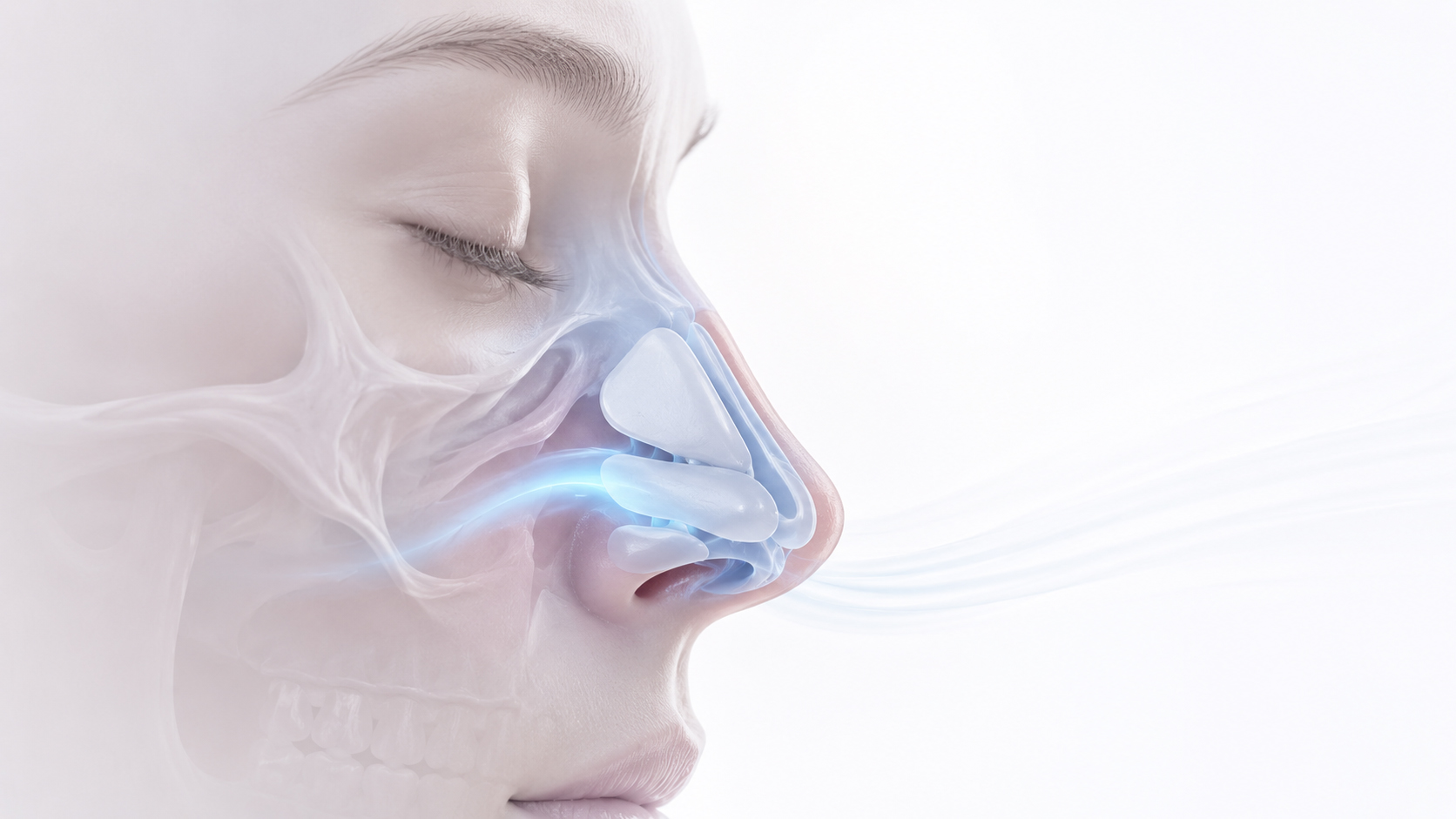
Rhinoplasty is the medical term for surgery performed to reshape the nose. During the procedure, the bone, cartilage and soft tissue structures of the nose are assessed according to the patient's individual anatomy. The nasal bridge, nasal tip, nostrils, nasal wings, nasolabial angle and overall profile balance may all form part of the surgical plan.
Breathing function is considered alongside aesthetic appearance. If a deviated septum or another structural issue inside the nose affects airflow, these concerns may be addressed together with rhinoplasty in suitable patients.
A Specialist Perspective: There Is No Single “Ideal Nose”
The aim of rhinoplasty is not to give every patient the same nose. Facial proportions, skin thickness, cartilage support, existing nasal anatomy and personal expectations should all be considered together. The surgical technique is then selected according to this individual assessment.
Who May Be Suitable for Rhinoplasty?
Rhinoplasty may be considered by people who are unhappy with the appearance of their nose or who experience breathing difficulties related to structural issues within the nose. Suitability for surgery is determined not only by aesthetic expectations but also by examination findings and general health.
- People with a prominent hump on the nasal bridge
- People with a drooping, wide or irregularly shaped nasal tip
- People who feel their nose is out of proportion with their facial features
- People whose nasal shape has changed following trauma or an accident
- People experiencing breathing difficulties due to structural conditions such as a deviated septum
- People who have previously undergone nasal surgery and continue to experience aesthetic or functional concerns
The Decision to Undergo Rhinoplasty Should Follow a Medical Assessment
Every nose is anatomically different. The decision to proceed with surgery should therefore take into account physical examination findings, the patient's expectations, breathing function and overall medical suitability.
Consultation and Planning Before Rhinoplasty in Turkey
The surgical plan for rhinoplasty is developed according to the findings of the consultation and examination. Facial proportions, profile balance, skin thickness, cartilage support, the structure of the nasal bridge and tip, and the airway are assessed together.
What Is Assessed During the Initial Consultation?
- Nasal bridge and tip structure
- Facial and profile balance
- Skin thickness and tissue characteristics
- Cartilage support
- Breathing function
- The patient's expectations and suitability for surgery
How Is the Surgical Plan Developed?
The existing nasal structure and the desired changes are considered together. At this stage, the surgeon determines whether an open, closed, preservation or revision approach may be more appropriate. Functional corrections can also be incorporated into the aesthetic plan when required.
Why Is Individualised Planning Important?
Skin characteristics and bone and cartilage anatomy vary from one patient to another. These differences can influence both the surgical technique and the recovery process. Rhinoplasty should therefore be planned according to the individual's anatomy rather than a standardised template.
Preparing for Rhinoplasty
Preparing for rhinoplasty involves more than simply choosing a surgery date. During the consultation, the patient's expectations are discussed openly and the nose and facial structure are carefully assessed. The surgeon considers both the aesthetic changes the patient would like to achieve and what is anatomically appropriate.
As smoking can negatively affect healing, patients may be advised to stop smoking approximately one to two weeks before surgery where possible. Individual recommendations before and after surgery should be determined by the doctor according to the patient's health and the extent of the planned procedure.
Clarifying Expectations
During the rhinoplasty consultation, the patient's concerns and desired changes are discussed in detail. Planning is not based on photographs alone; facial proportions, nasal anatomy and breathing function are considered together.
Considering Aesthetics and Function Together
For patients with breathing difficulties, assessment of the internal nasal structures is important. The examination helps determine whether functional correction should be considered alongside aesthetic changes.
For further information about making an informed decision before surgery, you can read our guide to things to know about rhinoplasty.
Rhinoplasty Techniques
The rhinoplasty technique is selected according to the patient's nasal anatomy, skin characteristics, existing deformity, previous surgery and desired changes. The same approach may not be appropriate for every patient.
- Open Rhinoplasty: This approach may be considered in suitable cases where detailed work on the nasal tip and cartilage structures is required.
- Closed Rhinoplasty: In closed rhinoplasty, incisions are placed inside the nose. Suitability depends on the patient's anatomy and the corrections required.
- Preservation Rhinoplasty: An approach designed to preserve the natural anatomical structure of the nasal bridge as much as possible.
- Revision Rhinoplasty: A secondary surgical procedure that may be considered for patients who have undergone previous nasal surgery and continue to experience aesthetic or functional concerns.
To explore the differences between surgical approaches in more detail, you can read our guide to rhinoplasty techniques.
Ultrasonic Piezo Surgery
Ultrasonic piezo technology may be used in suitable cases where reshaping of the nasal bones is required. This technology can allow controlled and precise work on bone structures.
How Is the Technique Selected?
Skin thickness, the nasal framework, cartilage support, breathing function and the desired changes are considered together when choosing the surgical technique. The final approach is determined after examination.
What Is Preservation Rhinoplasty?
Preservation rhinoplasty is an approach designed to preserve the natural anatomical integrity of the nasal bridge as much as possible. In suitable patients, the required changes may be planned at deeper structural levels while preserving the natural architecture of the nasal dorsum.
Not every patient is suitable for preservation rhinoplasty. The structure of the nasal bridge, skin characteristics, existing deformity and previous surgery all play a role in selecting the appropriate technique.
Who May Be Considered for Preservation Rhinoplasty?
This technique may be considered when the anatomy of the nasal bridge and the existing deformity are suitable for a preservation approach. Different rhinoplasty techniques may be required in revision cases or in patients with more complex structural concerns.
Op. Dr. Oğuzhan Aydoğdu’s Rhinoplasty Training and Specialist Background
Op. Dr. Oğuzhan Aydoğdu holds a Plastic, Reconstructive and Aesthetic Surgery specialist qualification approved by the Republic of Turkey Ministry of Health. His professional training in rhinoplasty includes national and international programmes focusing on preservation and dorsum preservation approaches.
Among the programmes he has attended are the Applied Rhinoplasty Course – Dorsum Preservation Rhinoplasty organised by the Rhinoplasty Society of Europe, as well as scientific courses focused on preservation rhinoplasty. He has also participated in a clinical training programme in London and received training in microsurgery.
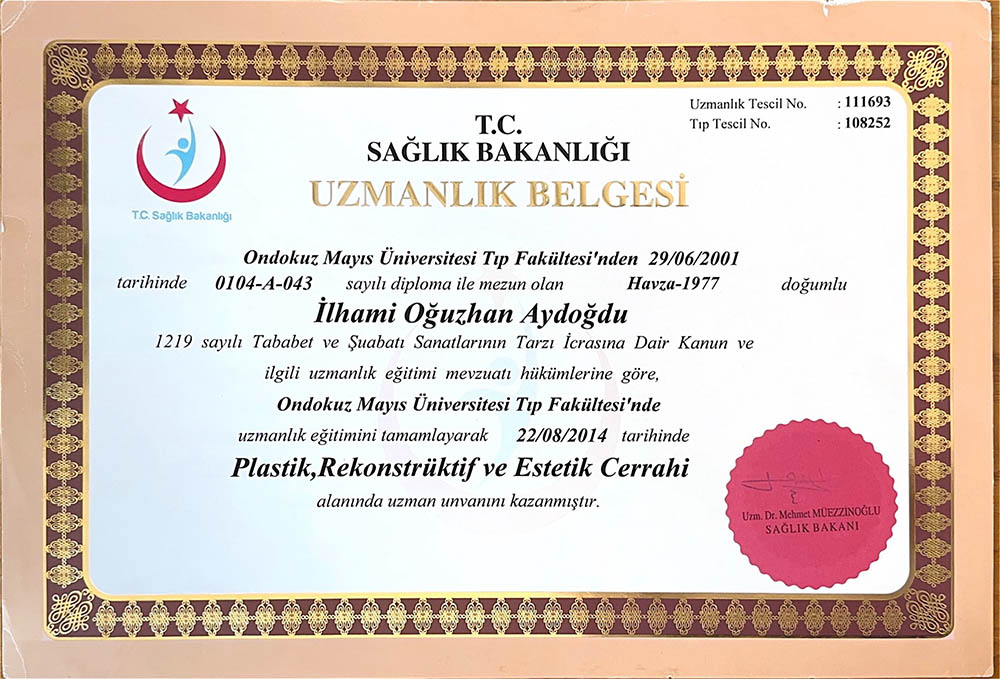 Plastic, Reconstructive and Aesthetic Surgery Specialist Certificate Official specialist certification documenting his training in plastic surgery.
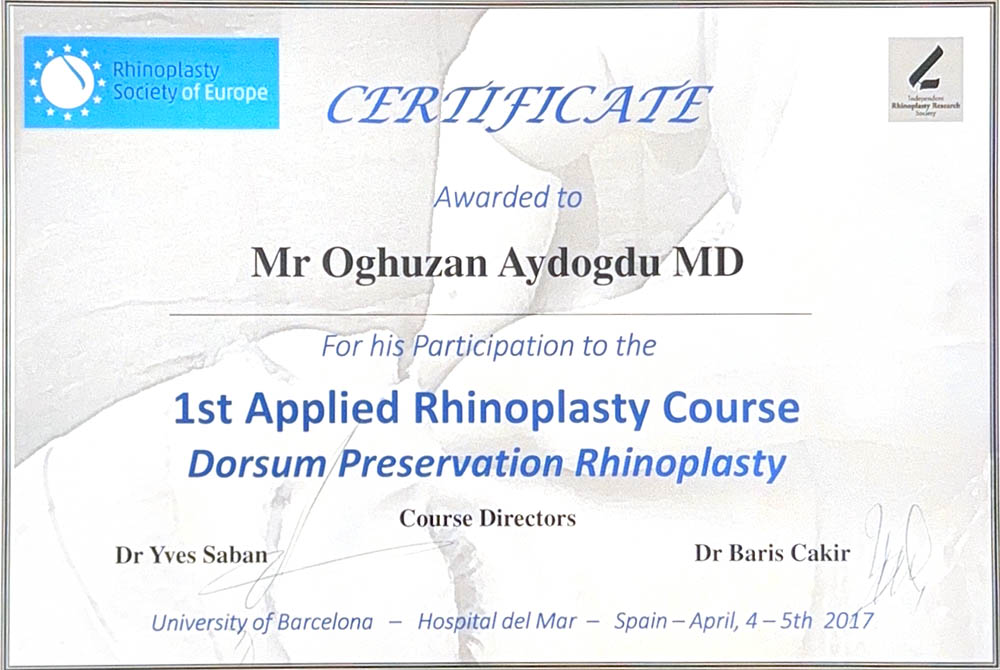 Applied Rhinoplasty Course – Barcelona Training focused on the dorsum preservation rhinoplasty approach within the Rhinoplasty Society of Europe.
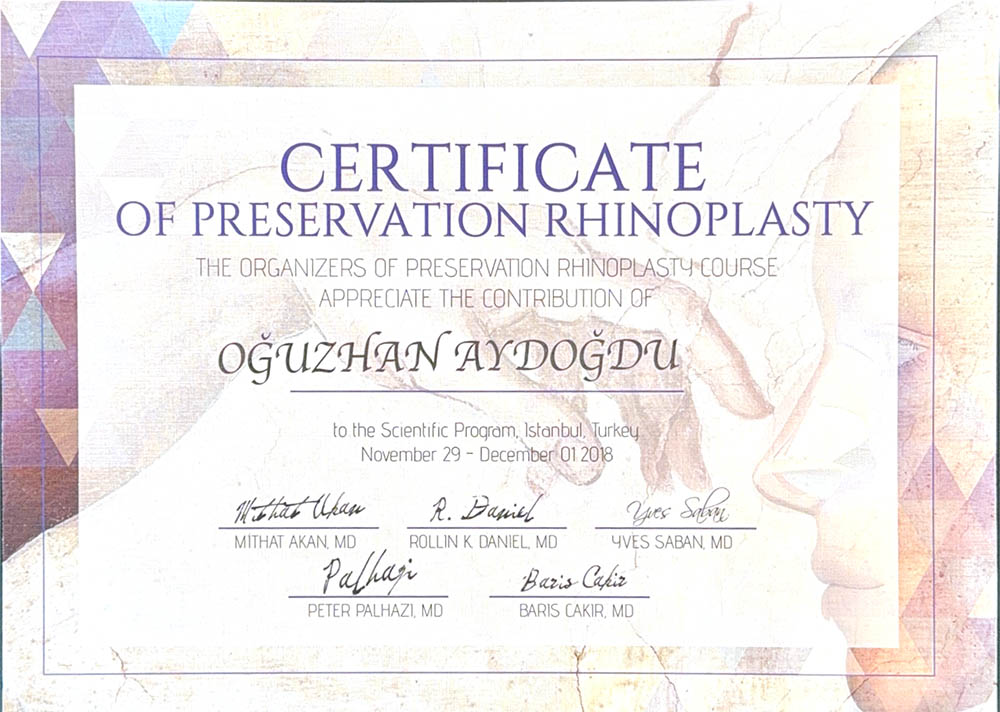 Preservation Rhinoplasty Scientific Program – Istanbul A programme focusing on the scientific and surgical principles of preservation rhinoplasty.
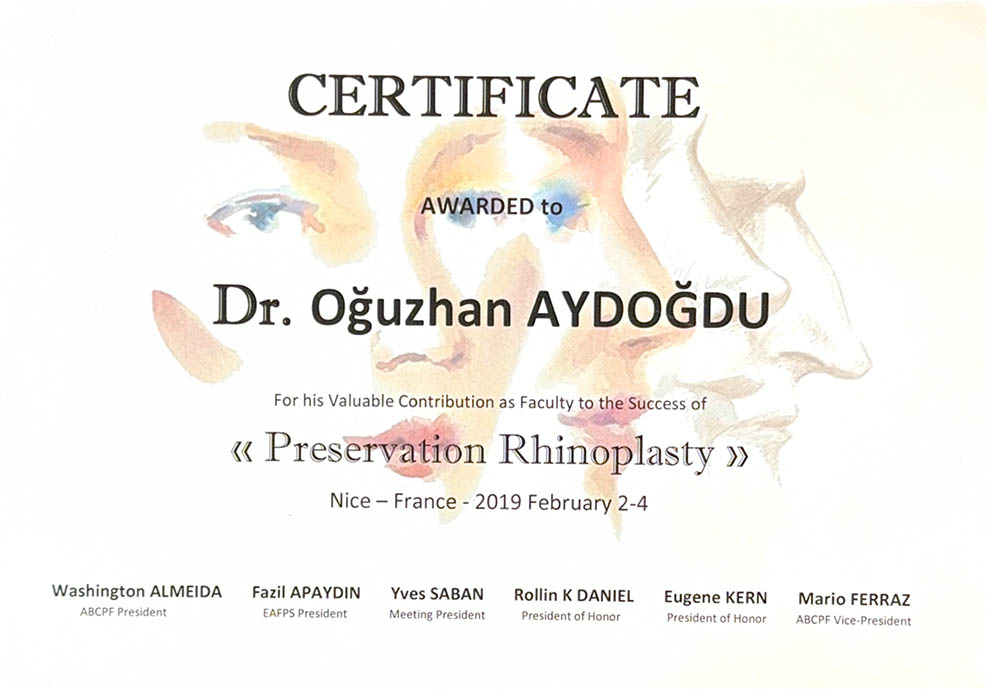 Preservation Rhinoplasty Course – Nice / France A training programme focused on preservation rhinoplasty techniques and nasal dorsum anatomy.
Why Does Experience Matter in Rhinoplasty?
Rhinoplasty can affect both nasal appearance and function. Accurate assessment of the anatomy, selection of an appropriate surgical technique and individualised postoperative follow-up are therefore important parts of the treatment process.
Recovery After Rhinoplasty

Recovery after rhinoplasty varies depending on the extent of the procedure and individual skin and tissue characteristics. Swelling, mild bruising and nasal congestion may occur during the first few days. The timing for removing splints and silicone supports is determined according to the surgical plan.
The First Week
The nose should be protected from trauma, prescribed medication should be taken as directed and nasal cleaning should be performed according to the doctor's instructions. Splints and silicone supports are commonly assessed within approximately one week and removed when appropriate.
The First Few Months
A significant proportion of the swelling may subside during the first few weeks. Swelling of the nose itself can persist for longer. The time required for the nose to approach its final appearance varies between patients and may take 6–12 months in some cases.
What Should You Consider After Surgery?
- Avoid trauma or pressure to the nose.
- Avoid sleeping face down and follow the doctor's recommendations regarding sleeping position.
- Use prescribed medication and nasal sprays as directed.
- As smoking may negatively affect tissue healing, it should be avoided for the period recommended by the doctor.
- Taping and massage should only be performed if and as recommended by the doctor.
- The timing of wearing glasses and returning to exercise should be based on individual recovery.
- Attend all scheduled follow-up appointments.
For more detailed information about how swelling and oedema may change over time, you can read our guide to swelling and oedema after rhinoplasty.
Taping and Massage
After the nasal splint and initial tapes have been removed, some patients may be advised to continue taping for a short period or perform massage in a specific direction. These recommendations are not the same for every patient. The duration and technique should be determined according to examination findings and individual healing.
Nutrition and Fluid Intake
Adequate fluid intake and a balanced diet are important during recovery. Protein-rich foods, fresh vegetables and fruit can form part of a balanced diet. Excessively salty foods, smoking and alcohol should be avoided.
Wearing Glasses
During the healing of the nasal bones and cartilage, pressure from glasses on the nose should be taken into consideration. The appropriate time to resume wearing sunglasses or prescription glasses should be determined by the doctor according to the extent of surgery and individual recovery.
Why Are Follow-Up Appointments Important?
Postoperative follow-up allows swelling, skin and tissue healing, internal nasal structures and any additional care requirements to be assessed. This is why recommendations regarding taping, massage and returning to everyday activities are individualised.
When Should You Contact Your Doctor?
A small amount of light pink drainage may occur during the first 24–48 hours. If bleeding increases, continues as bright red bleeding, or an unexpected symptom causes concern, the doctor should be contacted.
Revision Rhinoplasty
Revision rhinoplasty may be considered when concerns about nasal shape, breathing difficulties or dissatisfaction persist after previous nasal surgery. During revision planning, tissue changes resulting from the previous operation and the remaining cartilage support are assessed in detail.
The aim of revision planning is to identify the existing concern accurately and establish realistically what changes may be possible. For more detailed information, visit our revision rhinoplasty page.
Rhinoplasty in Turkey for International Patients
Turkey is an established destination for patients travelling internationally for aesthetic surgery. For patients considering travelling to Turkey for rhinoplasty, consultation, surgical planning and postoperative follow-up can be organised with travel arrangements and the length of stay in mind.
Patients travelling from abroad should discuss the recommended length of stay, postoperative checks and return travel with the medical team before finalising their journey. This allows the treatment and follow-up process to be planned according to individual needs.
How Are Rhinoplasty Costs in Turkey Determined?
The cost of rhinoplasty in Turkey may vary depending on the extent of surgery, whether the procedure is a primary or revision rhinoplasty, the surgical technique, hospital requirements and whether additional functional procedures are needed. For this reason, personalised pricing can be provided after the consultation and surgical plan have been completed.
For further information about the factors that may influence treatment costs, you can also read our article on rhinoplasty prices.
Frequently Asked Questions About Rhinoplasty in Turkey
How long does rhinoplasty surgery take?
The duration of surgery varies according to the procedures required. Rhinoplasty may take approximately 2–3 hours for many patients, while revision surgery or additional functional procedures may require more time.
Is there an age limit for rhinoplasty?
Nasal and facial development should be largely complete before rhinoplasty is considered. In general, assessment may be possible from around the age of 17 for women and 18 for men. The final decision depends on individual development and medical assessment.
When can I return to work or school after rhinoplasty?
Many patients may be able to return to desk-based work or normal daily activities within approximately one week. The exact timing varies according to the extent of surgery and individual recovery.
Can rhinoplasty improve breathing difficulties?
If breathing difficulties are caused by structural issues inside the nose, functional corrections may be considered alongside aesthetic surgery in suitable patients.
When does swelling decrease after rhinoplasty?
A significant amount of swelling and bruising around the eyes may improve during the first few weeks. Swelling of the nose can last longer, and in some patients it may take 6–12 months for the final appearance to become more apparent.
When can I wear glasses after rhinoplasty?
Because glasses place pressure on the nose, the appropriate time to resume wearing them depends on individual healing. Medical approval should be obtained before returning to particularly heavy-framed glasses.
Can I smoke after rhinoplasty?
Smoking can reduce oxygen delivery to tissues and negatively affect healing. Where possible, patients may be advised to stop smoking one to two weeks before surgery and avoid smoking for at least two weeks afterwards.
When are nasal packing or silicone supports removed?
The timing depends on the procedure performed and the materials used. Breathable silicone supports are commonly assessed within approximately one week in many patients.
Are rhinoplasty results permanent?
The structural changes made during rhinoplasty can be long-lasting. However, ageing, individual skin characteristics and trauma may affect the appearance of the nose over time.
Is open or closed rhinoplasty more suitable?
The choice depends on the patient's nasal anatomy and the corrections required. Neither open nor closed rhinoplasty is universally better; the most appropriate approach is selected after individual assessment.
Does the Information on This Page Replace Personal Medical Advice?
No. The information on this page is intended for general educational purposes. Suitability for surgery, the surgical technique and postoperative recommendations should be determined individually following medical assessment.
Rhinoplasty in Turkey: Consultation and Appointments
If you are considering rhinoplasty in Turkey, you can contact our clinic to arrange a consultation and discuss your treatment options. During the assessment, your nasal anatomy, facial proportions, breathing function and expectations will be considered together.
Clinic Address: Platin Ofis, Atatürk Bulvarı 3. Kısım No: 43, Yenimahalle, Floor: 5, 55270 Atakum / Samsun, Turkey