
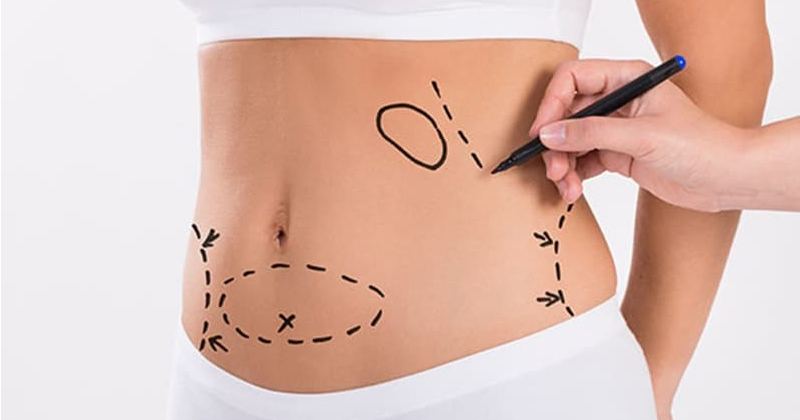
Goodbye to Stubborn Fat: Everything You Need to Know About Liposuction
You diet, you go to the gym regularly, but that fat in certain areas just won't go away? You are not alone! One of the most popular and effective methods in the world of body shaping, Liposuction (fat removal), comes into play exactly at this point.
Despite its popularity, patients have many questions and details they are curious about regarding this operation. In this article, we have answered the most frequently asked questions about liposuction.
1. What Exactly is Liposuction and is it a Weight Loss Method?
This is the most important and fundamental point that needs to be clarified: Liposuction is not a weight loss or slimming surgery. Liposuction is a body aesthetics (contour correction) procedure that permanently removes stubborn, regional fat deposits that cannot be expelled from the body despite diet and exercise using a vacuum technique. Its aim is to make body lines more aesthetic and proportional rather than losing weight.
2. To Which Parts of the Body Can Liposuction Be Applied?
Liposuction can be applied to stubborn fat deposits in almost every part of the body. The most common application areas are:
- In Women: Abdomen, waist circumference ("muffin top" area), hips, buttocks, inner legs, and knees.
- In Men: Abdomen, love handles, back, and the male breast region (gynecomastia).
- In Both Genders: Jowl, upper part of the arms, and ankles.
In addition, a special technique such as Laser Lipolysis can be used to treat excessive sweating problems by targeting the underarm sweat glands.
3. How is Liposuction Surgery Performed?
Liposuction is performed in a hospital environment, in an operating room, under local or general anesthesia depending on the size of the area to be treated. The surgeon opens very small incisions of a few millimeters in the area to be treated. From these incisions, the fat tissue under the skin is sucked out with the help of a vacuum device by entering with thin, hollow tubes called "cannulas". Since the number of fat cells is permanently reduced during this process, the results are long-lasting.
4. How is the Recovery Process After Surgery?
The recovery process is generally fast and comfortable:
- The patient is usually discharged on the same day or after staying in the hospital for one night for more comprehensive procedures.
- There may be mild pain and aches in the first 3-4 days, but these are kept under control with simple painkillers.
- If you have a desk job, you can usually return to work after 3-4 days.
- After surgery, it is very important to wear a special corset for 4-6 weeks for the skin to adapt to its new contour.
- Light walks can be started after 2 weeks, and heavier sports after 6-8 weeks.
5. What is the Maximum Amount of Fat That Can Be Taken with Liposuction?
Within safety limits, the maximum amount of fat that can be taken from the body in one session is generally around 4-5 liters. However, it should not be forgotten that the aim is not to take as much fat as possible, but to create the best contour aesthetically. Therefore, liposuction is not a suitable method for patients who are overweight at the level of obesity.
6. When Will I See the Results and Are They Permanent?
Although the first results are seen within a few weeks as most of the edema is removed, it may take 6 months for the skin to fully settle and the final result to emerge. Since fat cells are permanently removed with liposuction, the results are also permanent. However, it is essential for the patient to maintain their weight and eat healthy to preserve the aesthetic result obtained.