
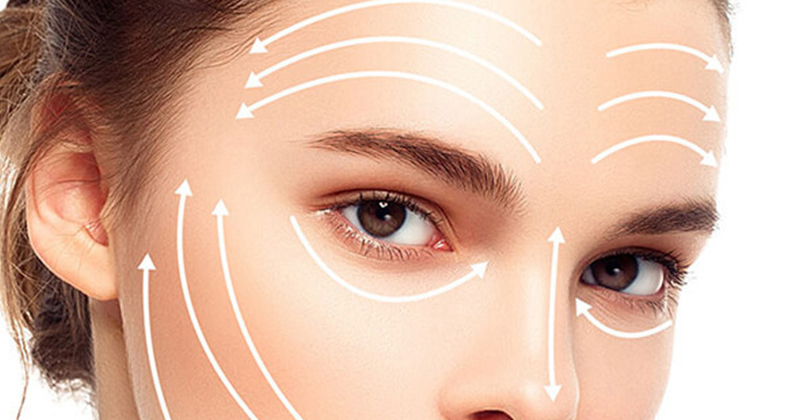
French Lift in Non-Surgical Facial Rejuvenation: What Is It, and Who Is It For?
Surgery is not always the only option to reduce skin sagging that occurs over time and to achieve a more rested facial appearance. One of the prominent applications among non-surgical facial rejuvenation methods is the thread lifting technique known as the French Lift (French thread). In this article, we handle curious topics such as what kind of lifting method the French Lift is, in which cases it is preferred, the process of the procedure, and points to be considered after the procedure in clear language.
What is the French Lift?
The French Lift is a non-surgical facelift and suspension technique applied without surgical incisions. In this method, tissues prone to sagging are carried upwards thanks to special threads placed under the skin (subcutaneous tissues), and a more recovered appearance in the facial oval is targeted. The structure of the threads used is one of the distinguishing points of the method: the outside of the threads consists of silicone (medical silicone coating), and the inside consists of a flexible carrier structure. In this way, a more natural movement harmony with mimics is aimed.
Which Areas is the French Lift Applied To?
The area targeted with the French Lift varies depending on the person's sagging distribution and facial anatomy. The most common application areas are:
- Mid-face and cheek line
- Jawline and facial oval
- Jowl area
- Eyebrow line and outer eye area (in suitable cases)
- Mild-to-moderate laxity in the neck area (depending on patient selection)
The Most Important Difference: Dynamic and Long-Term Support
Different types of threads can be used in thread lifting applications. While some threads aim to support the collagen response under the skin by dissolving over time, the threads used in the French Lift are designed to offer long-term mechanical support. Therefore, the French Lift may stand out in people who want a more significant recovery in terms of the stretching process and aim to protect the result for a longer period. Still, permanence varies depending on skin structure, degree of sagging, age, and lifestyle.
Who is a Suitable Candidate for French Lift?
The French Lift is generally planned for people who have mild and moderate sagging complaints but do not consider surgical facelift or do not need it yet. The following points are important in suitable candidate evaluation:
- The level of sagging and the change in the facial oval
- Skin quality and elasticity
- Whether there is volume loss in the face (combined planning if necessary)
- Expectations being realistic
In people with advanced skin excess or very significant sagging, it may be difficult to reach the targeted result only with thread lifting. This distinction becomes clear during the examination.
How Does the Application Process Proceed?
The French Lift procedure is planned under sterile clinical conditions. In most patients, the procedure is performed with local anesthesia; in some people, sedation may be preferred to increase comfort. During the procedure, entry points are usually selected from areas such as inside the scalp or around the ear to reduce visibility. The threads are placed under the skin in accordance with the appropriate plan, and the tissues are suspended upwards in the targeted vectors.
What Should Be Considered After the Procedure?
Mild edema, sensitivity, or temporary irregularities at the entry points may be seen in the first days after the procedure. To protect the result during the healing period, these suggestions are important:
- Avoiding excessive mimic movements for the first 1-2 weeks
- Staying away from facial massage, harsh skin care applications, and intense pressure
- Limiting heat-increasing activities such as heavy sports, sauna/hammam for a while
- Adjusting the sleeping position (especially face-down pressure) according to the physician's recommendation
To Whom and How Much Benefit Does It Provide?
When planned with the right patient selection, the French Lift can be an effective method aiming for recovery in the facial oval and a more rested expression among non-surgical facial rejuvenation options. However, as in every application, the result differs depending on variables such as the degree of sagging, skin quality, and personal recovery response. The healthiest way to understand whether the French Lift is suitable for you is to make personalized planning with facial analysis and examination to be performed with our specialists.